Step-by-Step Breakdown of the Components
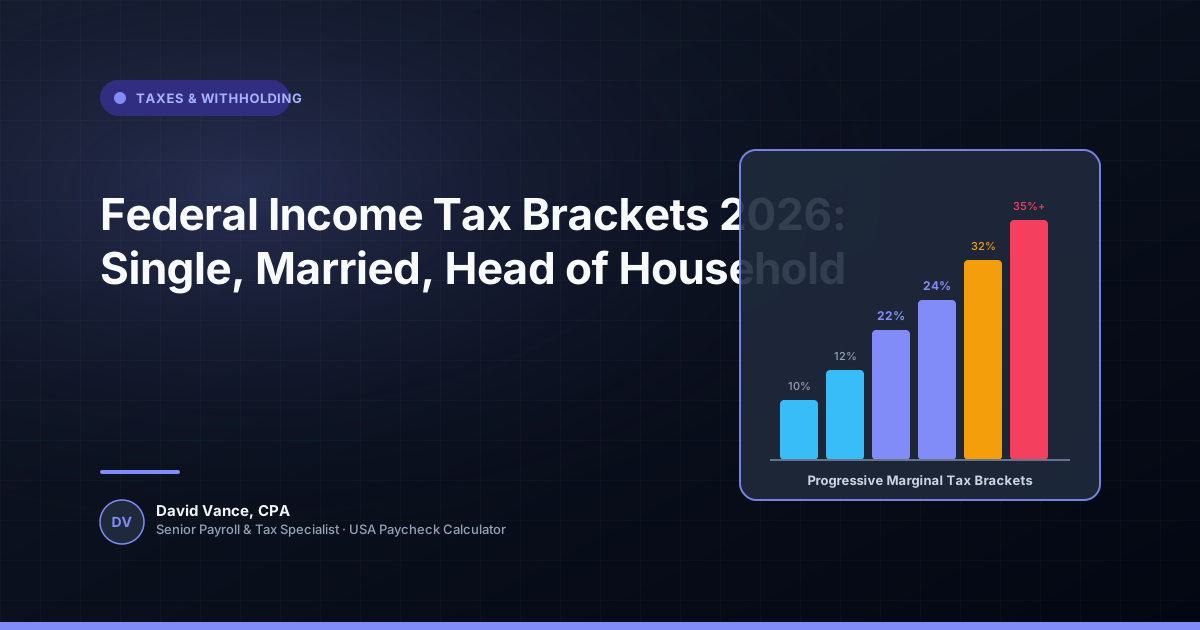
For 2026, the federal individual income-tax system continues to use graduated rates of 10%, 12%, 22%, 24%, 32%, 35% and 37%. The income ranges depend on filing status. The IRS's 2026 materials provide the current rate schedules and withholding tables. turn0search8■ For a single filer, for example, the 2026 rate schedule begins at 10% and moves through the higher brackets as taxable income rises. The key word is taxable. Your gross salary is not automatically the same as taxable income.
This matters when you use a paycheck calculator. A calculator may start with gross wages, but federal withholding is not calculated by simply taking the annual salary and multiplying it by one bracket percentage. Payroll withholding uses prescribed methods and the employee's Form W-4 information.
Taxes, Deductions, and Adjustments
The marginal system works in layers. If part of your taxable income falls in a 10% bracket and the next portion falls in a 12% bracket, the 12% rate applies to that next portion—not retroactively to every dollar you earned.
That is why receiving a raise does not mean your entire paycheck suddenly becomes subject to a much higher federal tax rate.
Filing status also matters. The brackets for Single, Married Filing Jointly, Married Filing Separately and Head of Household are different. A paycheck estimate that uses the wrong status can therefore produce a misleading result.
Estimating and Verifying Your Paycheck
Another distinction worth keeping clear is marginal tax rate vs effective tax rate. Your marginal rate is the rate applying to your highest layer of taxable income. Your effective rate is the overall federal income-tax burden relative to the relevant income measure. Payroll withholding is yet another number.
For paycheck planning, don't use a tax-bracket table as a shortcut for predicting your take-home pay. Use the current IRS withholding method or a calculator designed around it, then account for FICA, state or local taxes and payroll deductions separately.
The brackets explain the tax structure. They are not, by themselves, a paycheck calculator.