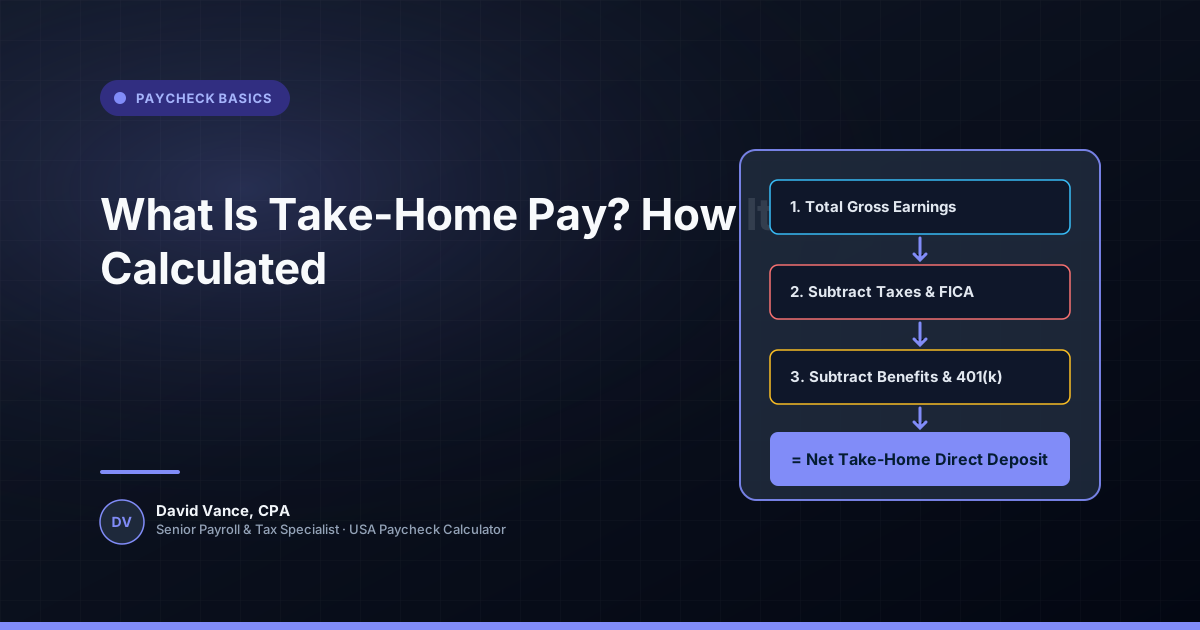
Step-by-Step Breakdown of the Components
The calculation starts with gross pay. From there, payroll may subtract federal income-tax withholding, Social Security and Medicare taxes, state or local income taxes where applicable, retirement contributions, insurance premiums, flexible spending contributions, garnishments and other deductions.
There is an important distinction here: not every amount removed from a paycheck is technically a tax. A health-insurance premium or 401(k) contribution can reduce take-home pay even though it serves a different purpose from federal withholding.
Taxes, Deductions, and Adjustments
For 2026, employee Social Security withholding is 6.2% on covered wages up to the $184,500 wage base. Medicare withholding is 1.45% on covered wages with no wage-base limit. Employers also begin withholding the 0.9% Additional Medicare Tax on wages paid above $200,000 during the calendar year. turn0search5■ Federal income-tax withholding is more complicated than applying one percentage to gross pay. Employers use withholding methods and the information supplied on Form W-4. The IRS's 2026 Publication 15-T contains updated withholding tables and methods for current payroll calculations.
A useful mental model is:
Gross pay − payroll taxes − deductions = take-home pay But treat that as a framework, not a universal formula with one fixed set of percentages. The actual calculation depends on the worker's circumstances.
Estimating and Verifying Your Paycheck
Pay frequency matters, too. Someone earning $78,000 annually could receive 52 weekly checks, 26 biweekly checks, 24 semimonthly checks or 12 monthly checks. The annual salary is the same, but the amount on each individual paycheck is different.
This is why a salary number alone is not enough to answer “How much will I take home?”
A paycheck calculator is most useful when you enter the details that change the result: state, pay frequency, filing status, W-4 information and recurring deductions. The goal is not to predict a payroll statement down to the last cent without the employer's payroll setup. It is to turn a gross-pay number into a reasonable estimate of what you may actually receive.