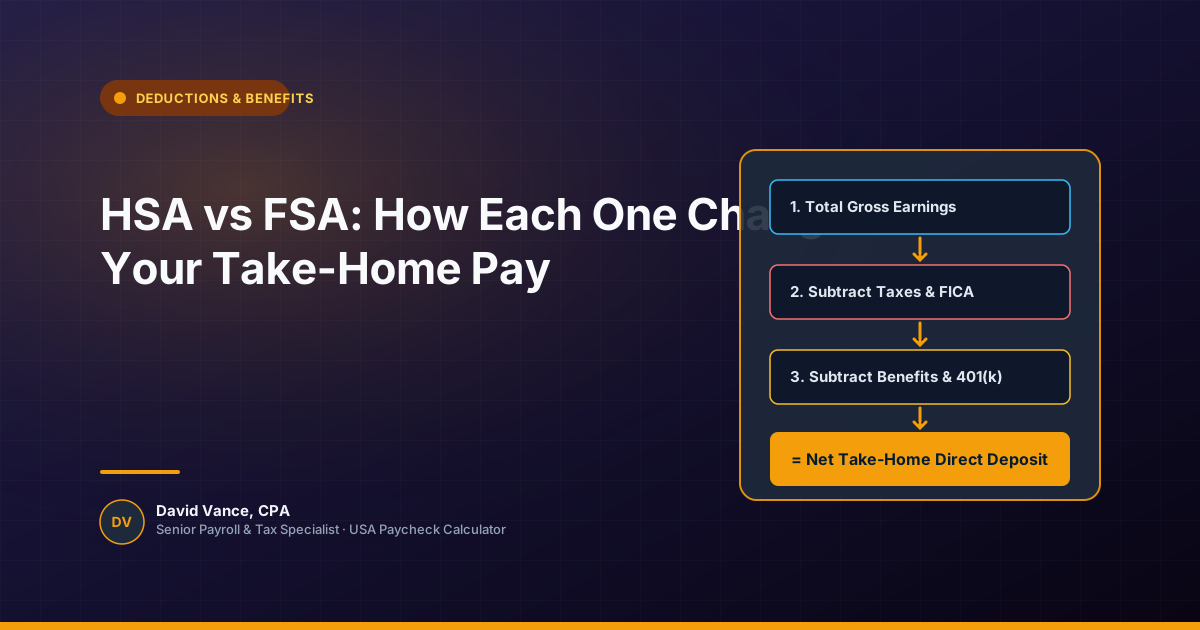
Step-by-Step Breakdown of the Components
A Health Savings Account is generally available only to people who meet the eligibility requirements for an HSA-qualified high-deductible health plan. A Flexible Spending Account is an employer benefit arrangement with its own eligibility and plan rules.
From a paycheck perspective, the key issue is the tax treatment of the contribution and the way the employer's payroll system handles it.
A qualifying contribution made through payroll can reduce the amount of pay available to you while also affecting certain taxable wage calculations. The exact effect depends on the arrangement and applicable tax rules.
Suppose two employees each earn $5,000 in gross wages. One elects a payroll HSA contribution and the other elects an FSA contribution. Their bank deposits may both be lower than a worker with no contribution, but the tax treatment and account rules can differ.
Taxes, Deductions, and Adjustments
That difference matters when comparing benefits.
An HSA is associated with eligible medical expenses and has rules governing eligibility, contributions and distributions.
An FSA is an employer-sponsored arrangement with its own contribution and spending rules. The money may not behave the same way if you leave your employer or fail to use available FSA funds under the plan's terms.
For paycheck planning, don't ask only “How much comes out?” Ask:
Is the contribution made through payroll?
Estimating and Verifying Your Paycheck
How does it affect taxable wages?
What happens to the account if my employment changes?
What are the plan's spending or rollover rules?
A paycheck calculator can show the immediate effect on estimated take-home pay, but it cannot replace the employer's benefit documents. The calculator should be used to understand the cash-flow impact, not to determine whether an HSA or FSA is better for your individual circumstances.
The larger lesson is useful beyond these two accounts: benefits can change both your paycheck and your tax calculation. When evaluating compensation, look at the interaction rather than treating every deduction as a simple subtraction from salary.