Step-by-Step Breakdown of the Components
That distinction matters when you look at a paycheck.
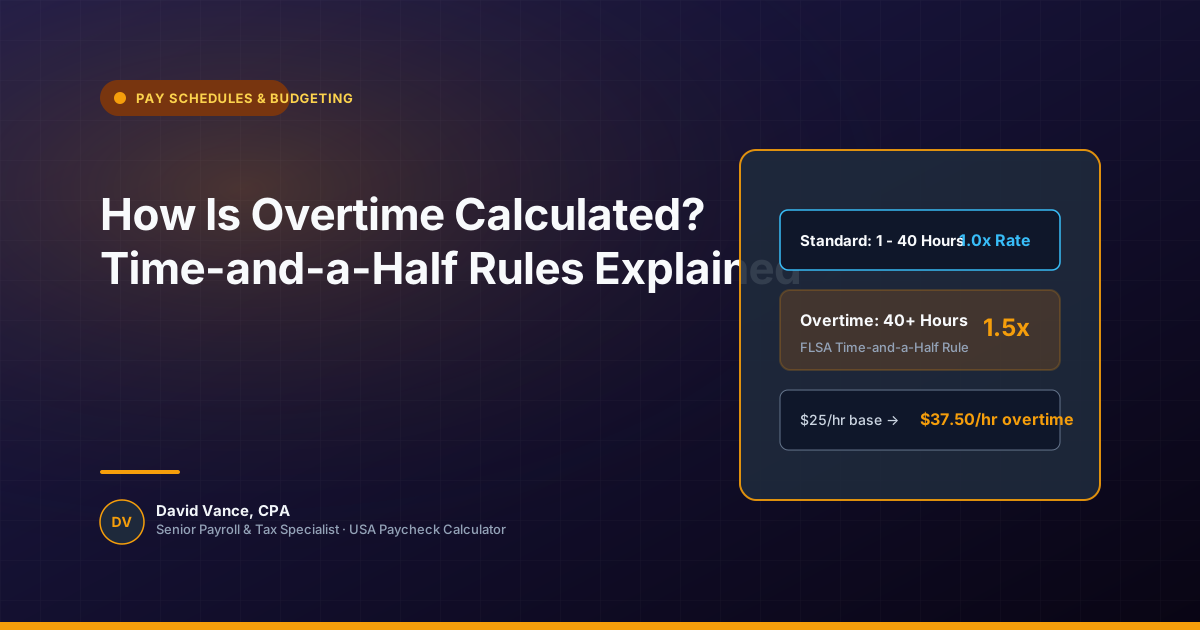
Suppose an employee's regular hourly rate is $20 and the employee works 45 hours in a workweek. Under the general federal FLSA overtime rule, the first 40 hours are paid at the regular rate and the remaining five hours are paid at 1.5 times the regular rate, or $30 per overtime hour. The gross wages for that workweek would therefore be $800 for the first 40 hours plus $150 for overtime, for a total of $950 before other payroll deductions.
That is a simplified example. The actual calculation can be more complicated when an employee receives bonuses, commissions, multiple rates or other compensation that must be considered in determining the regular rate.
Taxes, Deductions, and Adjustments
The Department of Labor explains that covered nonexempt employees generally must receive overtime at not less than one and one-half times the regular rate for hours worked over 40 in a workweek.
Overtime also affects taxes. The additional wages can increase federal income-tax withholding and payroll taxes. For 2026, Social Security and Medicare rules apply to covered wages, subject to their respective rules and limits.
One common mistake is to look at a biweekly pay period and assume that 80 hours is the only threshold that matters.
Federal overtime is generally determined week by week. An employee could work 45 hours in one week and 35 in the next; the overtime calculation does not simply average the 80 hours across the two weeks.
Estimating and Verifying Your Paycheck
State law can provide different or additional overtime protections, so the federal rule should not be treated as the only rule that can apply.
When using a paycheck calculator, enter overtime separately from regular hours if the tool provides that option.
Otherwise, you can accidentally calculate the whole paycheck as though every hour were paid at the same rate.
The practical lesson is simple: overtime is a payroll calculation, not just “extra hours multiplied by hourly pay.” The workweek, regular rate, applicable federal and state rules, and the way other compensation is treated can all matter.