Step-by-Step Breakdown of the Components
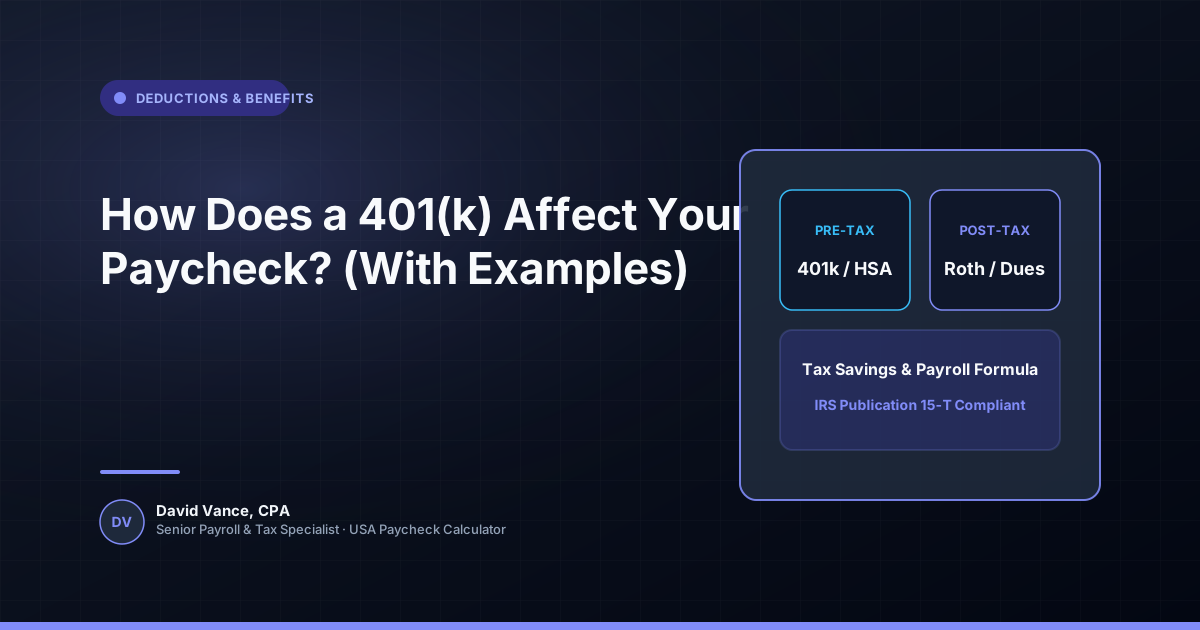
With a traditional 401(k), employee contributions are generally made before federal income tax is calculated on those wages, subject to the applicable plan and tax rules. With a Roth 401(k), contributions are made with after-tax dollars.
Both can reduce your take-home pay, but the tax timing is different.
Imagine a worker earning $4,000 in gross wages for a pay period who contributes $400 to a traditional 401(k). The employee does not simply lose $400 of take-home pay in every tax calculation. The contribution may reduce wages subject to federal income-tax withholding, although it does not necessarily reduce Social Security and Medicare wages in the same way.
That distinction is easy to miss.
Taxes, Deductions, and Adjustments
Your pay stub may therefore show: - gross pay, - 401(k) contribution, - federal taxable wages, - Social Security wages, - Medicare wages, - taxes, - and net pay.
Those wage figures can be different.
A Roth 401(k) works differently for current income-tax treatment because the contribution is made after federal income tax. It still reduces the amount deposited into your account, but it generally does not provide the same current federal income-tax reduction as a traditional contribution.
Employer matching contributions are another piece of the picture. A match can increase the value of the retirement benefit without appearing as a dollar-for-dollar deduction from your paycheck.
Estimating and Verifying Your Paycheck
For paycheck planning, the practical question is not simply “How much should I put into my 401(k)?” It is “How much current take-home pay am I willing to exchange for retirement savings and the tax treatment of that contribution?”
A paycheck calculator can model the cash-flow side of that decision. Enter the contribution as the correct type rather than simply subtracting it from gross pay.
If you are comparing jobs, look at the entire compensation package. A salary that is slightly lower can sometimes come with a materially different employer match or benefit structure. The paycheck is only one part of the decision.
And if you change your contribution percentage, compare the next pay stub with the previous one. That is often the clearest way to see how the payroll system actually applied the election.